
The Role of Air-Entrained Concrete in Building Long-Span Winter Bridges
Long-span bridges are engineered to move, flex, and carry immense loads while remaining dependable year after year. In winter climates, that responsibility expands as structures contend with freeze-thaw cycling, sustained moisture exposure, and ongoing deicing activity. Under these conditions, material selection shifts from preference to necessity. Air-entrained concrete supports this need by delivering internal protection that strengthens durability where cold-weather exposure is unavoidable.
December 23, 2025
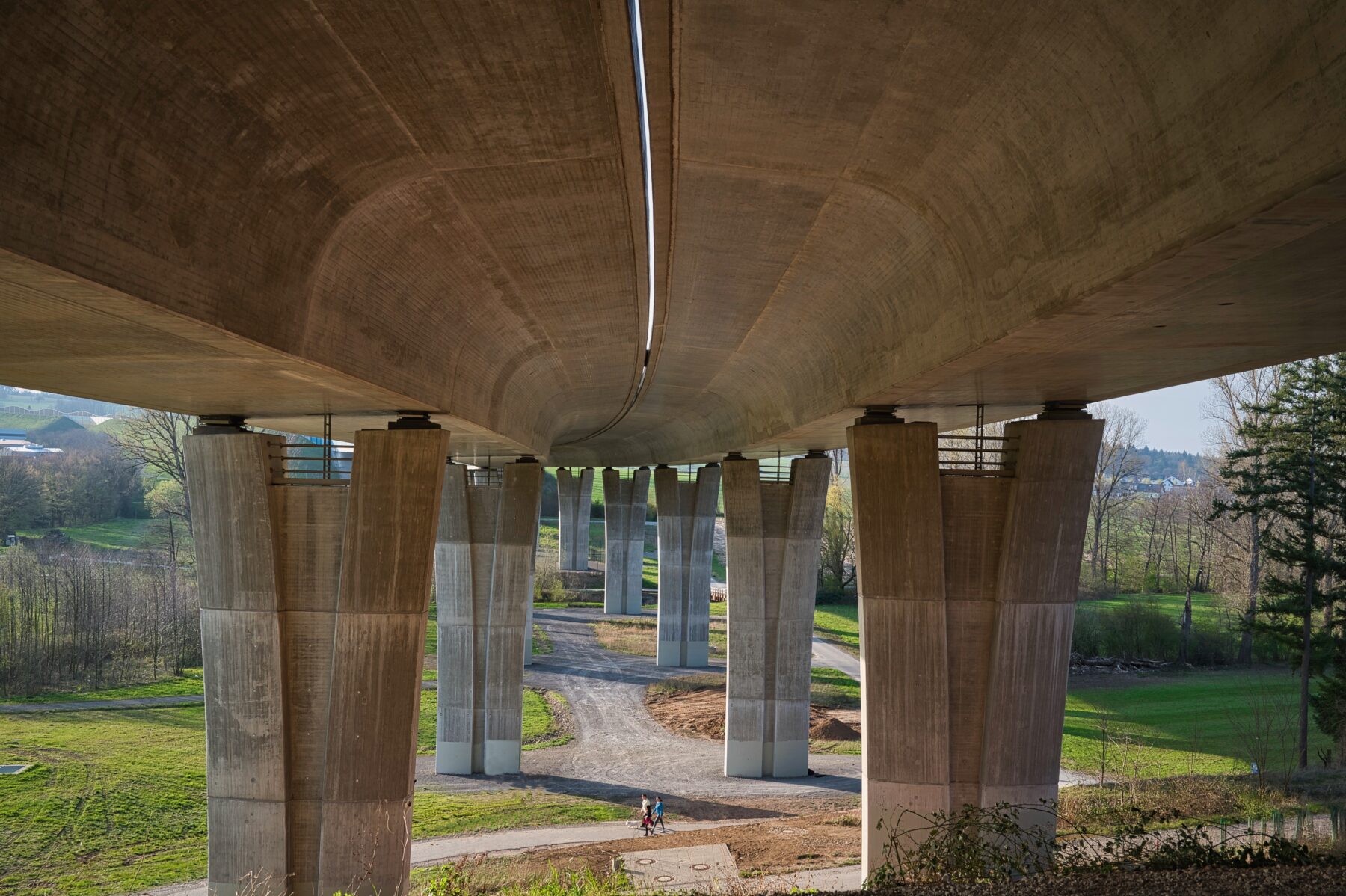
As spans grow longer and structural systems become more refined, concrete is expected to deliver reliability with increasingly narrow tolerances. Design efficiency leaves little room for material inconsistency over time. Through controlled air entrainment, the concrete matrix gains internal resilience that supports long-term stability without adding unnecessary mass. This balance allows ambitious bridge designs to remain structurally efficient while meeting demanding durability expectations.
Why Long-Span Bridges Experience Elevated Winter Stress
Extended spans introduce a distinct combination of environmental pressures. Broad surface areas retain moisture longer, while continuous structural elements undergo greater thermal movement as temperatures fluctuate. When conditions hover around freezing, internal stresses intensify within the concrete itself. Moisture trapped in hardened concrete expands as it freezes, generating pressure that initiates microcracking beneath the surface.
Over repeated cycles, these microcracks begin to connect and gradually undermine durability. In long-span bridges, where components are often thinner and more highly stressed, even limited internal damage can influence long-term behavior. Addressing this risk early at the material level helps limit the cumulative effects of winter exposure before deterioration becomes visible.
How Air Entrainment Protects the Concrete Matrix
Within the concrete matrix, a system of intentionally distributed microscopic air voids is introduced by design. These voids function as engineered relief zones rather than material defects. When internal moisture freezes and expands, nearby air pockets provide space for movement, relieving pressure within the cement paste. This mechanism limits internal cracking while preserving the bond between cement and aggregate.
Across the service life of a long-span bridge, where thousands of freeze-thaw cycles are expected, this internal buffering system becomes increasingly valuable. By stabilizing the concrete structure at a microscopic level, air entrainment helps maintain material consistency that supports predictable structural behavior over time.
Supporting Deck Durability Across Long Spans
Bridge decks remain among the most exposed structural elements during winter conditions. Snow accumulation, melting, refreezing, and traffic-driven moisture intrusion place continuous stress on the surface. Long-span designs often rely on thinner deck sections to control dead load, leaving little tolerance for material degradation as seasons change.
This internal protection helps bridge decks resist scaling, surface cracking, and progressive deterioration without increasing thickness or weight. Structural efficiency targets can be maintained while shielding the deck from winter-related damage. Over time, reduced surface distress contributes to fewer interventions and a more consistent riding surface across the entire span.
Managing Moisture Intrusion and Deicing Exposure
Winter maintenance practices introduce additional exposure pathways. Deicing chemicals repeatedly saturate bridge surfaces, accelerating moisture movement into the concrete. While no concrete system is entirely impermeable, limiting internal cracking reduces the pathways that allow rapid intrusion.
By reducing freeze-thaw damage, the stabilized concrete matrix helps preserve the concrete cover protecting reinforcing steel. Slowing moisture-driven deterioration delays corrosion processes and supports longer intervals between major repairs. For long-span bridges where access is complex and closures carry high impact, this durability contributes directly to lifecycle efficiency.
Precision During Cold-Weather Construction
The durability benefits associated with air entrainment depend on disciplined execution during construction. Cold-weather placement demands careful control of batching, transport, placement, and curing to protect the integrity of the air-void system. Excessive vibration, inconsistent admixture dosing, or poor temperature management can reduce air content and compromise long-term resilience.
Close coordination between ready mix producers, contractors, and inspection teams helps ensure air levels remain within specification from production through placement. When properly managed, air-entrained concrete maintains workability while delivering the freeze-thaw resistance required for complex bridge elements, including girders, pier caps, diaphragms, and decks.
Reinforcing Confidence in Long-Term Structural Behavior
Durability extends beyond visible condition at the surface. Long-span bridge designs rely on consistent concrete behavior to model deflection, creep, shrinkage, and load distribution over time. Limiting freeze-thaw damage helps preserve the material properties that underpin these calculations, supporting predictable structural response throughout the service life.
This consistency allows inspections, load ratings, and asset management decisions to remain grounded in reliable data rather than corrective assumptions. By protecting the internal structure of the concrete, air entrainment supports long-term confidence in how the bridge behaves under both environmental and traffic demands.
In long-span bridges exposed to winter conditions, this material system plays a quiet but essential role in long-term success. Through internal pressure management, controlled moisture response, and structural stability, complex designs are able to endure harsh climates without sacrificing durability. For infrastructure projects where longevity and reliability define success, air-entrained concrete remains a foundational material choice that supports dependable service for decades.