

What Is an Asphalt Base Course and Why Does It Matter?
An asphalt base course provides the support beneath finished pavement, helping distribute traffic loads and maintain stability. Learn how base materials, compaction, thickness, and soil conditions affect pavement performance and longevity.
October 1, 2026
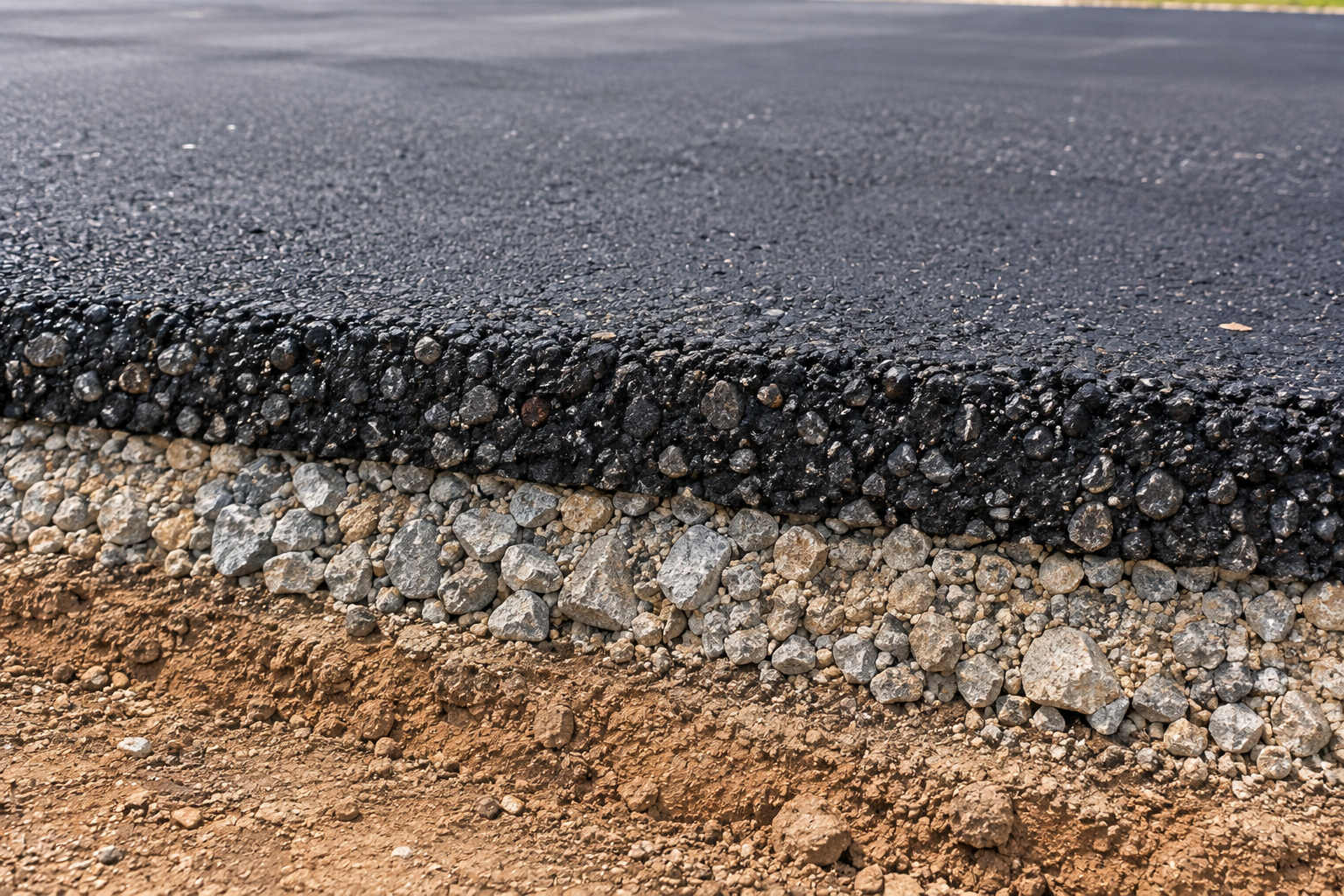
An asphalt base course is the layer of material placed beneath the finished surface of a paved driveway, parking lot, or street. Once paving is complete, it is no longer visible, yet it supports much of the weight that crosses the pavement. The material used in that layer, its thickness, and how tightly it is compacted all affect how the pavement above responds to traffic and changing ground conditions.
What Does an Asphalt Base Course Do?
Each passing tire’s weight spreads across a wider area inside the asphalt base course before that force reaches the soil below. A wheel presses on a small patch of surface, and each layer underneath passes the load down over a broader footprint, so the native ground carries far less pressure than the asphalt at the top. Pavements are stacked in that order on purpose, with the stiffest material near the surface and softer, less load-bearing material further down.
Drainage is the base course’s second job. A compacted layer of crushed stone puts distance between the asphalt and a subgrade soil that may hold water for days after a rain, so the surface rests on firm material instead of damp ground.
Where Does the Asphalt Base Course Sit?
The asphalt base course carries out that load-spreading work directly beneath the surface course, the top layer of asphalt that tires actually touch. Thicker pavements sometimes add an intermediate binder course between the two, made with larger stone and slightly less asphalt than the surface mix. Below the base comes a subbase when the design calls for one, and then the subgrade, the native soil shaped and compacted to form the foundation of the whole pavement.
Each layer relies on the one beneath it. Site grading sets the subgrade at the right elevation and slope before any base material arrives, which keeps runoff moving off the finished pavement rather than collecting underneath it.
What Materials Go Into an Asphalt Base Course?
Within that stack of layers, an asphalt base course is made from one of two materials, compacted crushed aggregate or a hot mix asphalt built with larger stone than the surface mix. When asphalt runs all the way from the subgrade to the surface, with no aggregate layer at all, the result is called full-depth construction. Pavements built that way lose less of their support when the soil underneath turns wet.
Traffic usually decides between the two. Paving design guidance points toward full-depth asphalt where heavy truck volumes are expected, and it reserves an untreated aggregate base for lighter traffic on sites that drain well. On those lighter jobs, the paving aggregates in the base blend angular crushed stone with finer particles, and the sharp edges lock against one another under a roller instead of sliding apart.
How Is an Asphalt Base Course Built?
Either material goes into an asphalt base course in compacted layers called lifts, rather than being spread and rolled in a single pass. Crews place aggregate base at a controlled moisture content and compact each lift before the next one goes down, keeping every lift thin enough for the roller’s force to reach its bottom. Density targets commonly sit at 95 percent or more of the material’s maximum density.
Once the base reaches grade, a loaded truck driven slowly across it shows any spots that flex or rut under weight, a check crews call proof rolling. Soft areas get dug out and rebuilt at this stage, while the repair still involves stone and soil rather than finished asphalt.
How Thick Should an Asphalt Base Course Be?
With those lifts in place, the finished thickness of an asphalt base course follows two things, the traffic the pavement will carry and the strength of the soil holding it up. For a driveway or light-traffic street built full depth, published thickness tables commonly land around 4 to 5.5 inches of asphalt base beneath a thin surface course, and areas that see heavy trucks call for more.
Soil moves that number in either direction. Iowa’s asphalt design guidance sorts subgrade into good, moderate, and poor support, and soils heavy in clay and fine silt fall into the poor class because they lose bearing strength when wet. A residential street over that kind of ground needs about 7 inches of total pavement, compared with about 5 inches over clean sand and gravel. Moisture held in that soil can also freeze through winter and lift sections of pavement unevenly, and a thicker base keeps the asphalt further from the wet ground.
Why the Asphalt Base Course Matters
The asphalt base course shapes how a pavement wears, since each decision made beneath the surface eventually shows up at the surface. The material has to match the traffic, each lift has to reach the specified density before paving continues, and the finished section has to account for how the soil below responds to water. When the base loses support, wheel paths can begin to rut and crack, and placing a new surface over that same weak structure leaves the underlying problem in place.
Cessford Construction supplies aggregate from its Le Grand Quarry along with asphalt and paving services, bringing the materials beneath the pavement and the finished surface into the same project. Request a quote to plan the base course and paving for an upcoming project.