

Building Concrete Containment Pads for Chemical Storage and Fuel Tanks
Storage tanks have the potential to carry significant load on the underlying structure. Once filled, they press sustained weight into the slab beneath them while exposing that surface to fuel, chemicals, moisture, and temperature shifts. The containment pad becomes the first and last line of structural defense. In these environments, concrete must be placed with intention, because every mix decision and placement detail shows up later in how the slab holds up under stress.
April 22, 2026
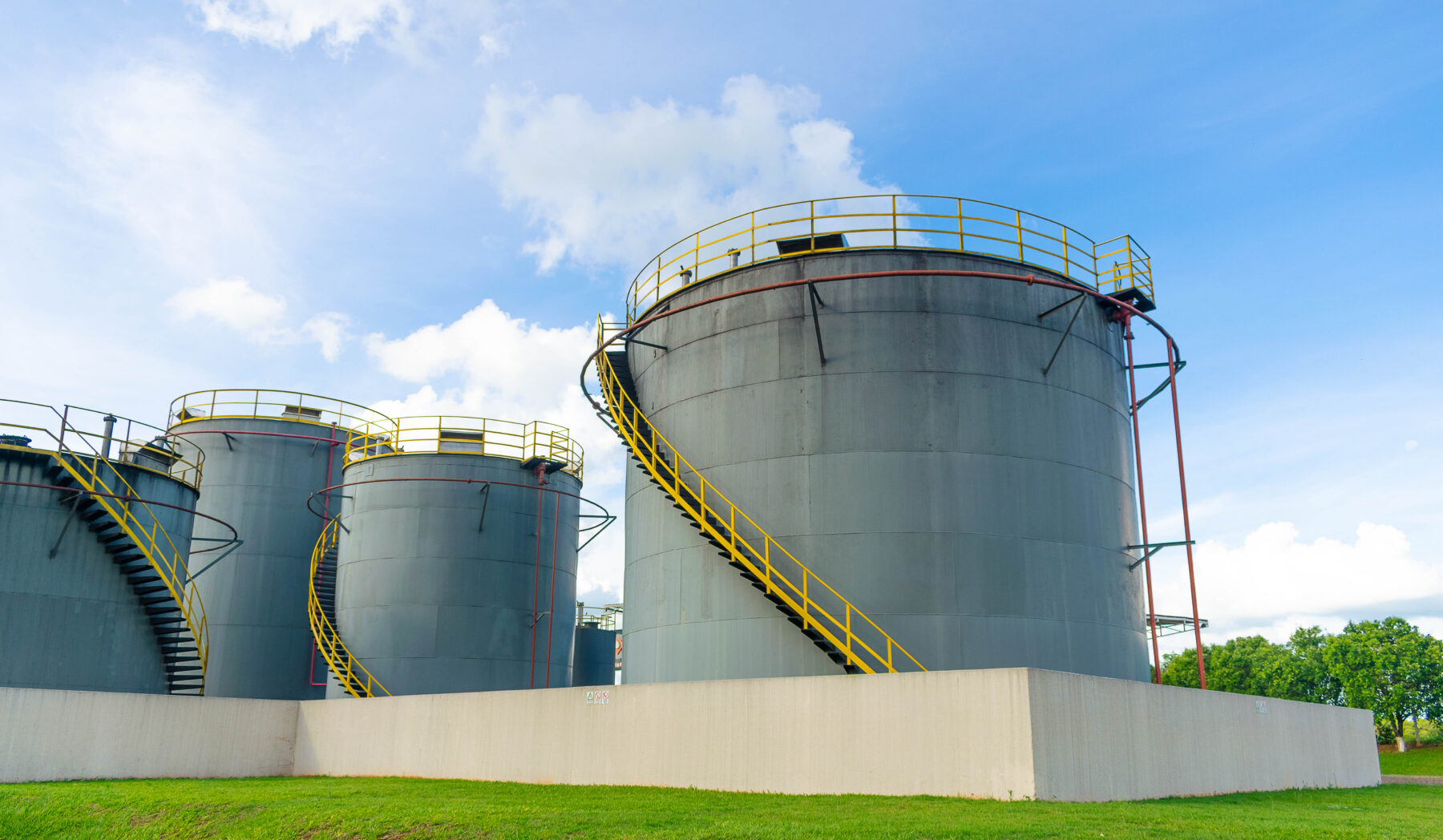
The difference between a standard slab and a containment pad comes down to how the material behaves under stress and exposure. Tanks introduce concentrated pressure at support points, while spills and runoff test the surface continuously. That combination requires more than thickness. It calls for a concrete system built from the subgrade up.
Engineering the Mix for Chemical Exposure
Inside the slab, pore structure controls how liquids move. A lower water-to-cementitious ratio tightens that internal network, reducing pathways where fuel or chemicals could migrate. Supplementary cementitious materials such as slag or fly ash further refine the matrix, creating a denser internal structure that resists absorption beneath the surface.
Aggregate selection also shapes how the pad carries weight. Angular, well-graded stone locks together under pressure, distributing tank loads across the slab rather than allowing stress to concentrate in isolated areas. During placement, proper consolidation removes trapped air and closes internal voids that could otherwise collect contaminants.
In climates where freeze-thaw cycles are common, air entrainment adds another layer of protection. Microscopic air pockets absorb expansion pressure when moisture freezes, limiting surface scaling and joint distress. That internal spacing becomes critical when containment pads face both environmental shifts and chemical contact.
Subgrade Preparation and Structural Support
Beneath the concrete, soil conditions influence everything above it. Uniform compaction across the footprint prevents differential settlement that can introduce cracking at slab edges or around tank supports. Where native soils vary, a stabilized base layer spreads pressure more evenly and reduces movement under sustained loading.
Tank legs and support rings create predictable stress zones. Reinforcement must be placed with those patterns in mind, positioned to control crack width and maintain structural continuity if shrinkage develops during curing. Proper cover depth protects steel from potential exposure while keeping reinforcement active within the slab.
Joint layout also plays a central role in long-term slab behavior. Control joints guide shrinkage cracking to planned locations, preventing random fracture lines across the containment area. Spacing based on slab thickness and site conditions keeps movement organized rather than reactive.
Surface Detailing and Integrated Containment
Spill management shifts focus to the slab surface. A dense, well-finished top layer reduces absorption and supports adhesion where protective coatings or liners are applied. Surface preparation must strike the right balance, creating texture for bonding without opening unnecessary porosity.
Containment curbs cast monolithically with the pad strengthen the overall system. Continuous placement between horizontal and vertical elements eliminates weak transition points where leakage could occur. Proper vibration during this phase reinforces bonding and removes air pockets along the interface.
Grading completes the containment strategy. A slight slope, typically one to two percent, directs runoff toward designated collection points instead of allowing liquids to pool at the tank base. That shaping protects the slab from prolonged exposure and reinforces regulatory compliance.
Curing That Protects the Slab’s Internal Structure
Hydration does not end when placement finishes. Early curing conditions determine how the slab’s internal structure develops. Moisture retention through curing compounds or wet coverings limits surface shrinkage and supports consistent strength gain through the depth of the slab.
Temperature control during this period reduces internal stress between the core and surface. Managing that thermal gradient minimizes tension that can later appear as cracking. Before tanks are installed, compressive testing, thickness verification, and surface evaluation confirm that the pad meets structural demands.
Fuel and chemical storage systems depend on what lies beneath them. A properly engineered containment pad distributes load, limits liquid migration, and responds predictably under seasonal and operational exposure. From mix design through curing, each phase shapes how the slab behaves once tanks are in service. Working with a supplier who understands those interactions keeps the containment system aligned with both structural demands and environmental responsibility.